Mao and the Facebook Panopticon

Photo by Clemson on Flikr. Click for attribution.

I read this passage in a biography of Mao Zedong (yes, I am making my way through all the major historical figures) and started having nightmares about Facebook. This is from the early 1940s, when Mao was consolidating his base for war against the Nationalists. According to Mao: The Untold Story, the Party chairman interrogated vast swaths of his young recruits in order to instill in them feelings of submission and control, and to foster an atmosphere of deep mistrust, as friends informed on each other.

“One supreme accomplishment of the terror campaign was to squeeze out every drop of information about any link whatever with the Nationalists. Mao introduced a ‘Social Relationship’ form: ‘Tell everyone to write down every single social relationship of any kind [my emphasis].’ At the end of the campaign, the regime compiled a dossier on every Party member. The result was that Mao knew every channel the Nationalists might use to infiltrate in the forthcoming showdown. Indeed, during the civil war, while the Nationalists were penetrated like sieves, they had virtually zero success infiltrating the Communists. Mao had forged a machine that was virtually watertight.”

That blew my mind a little. Facebook could do for free what took Mao huge expense and organized brutality. It’s a Stasi/KGB/mukhabarat/CIA dream come true.

As this blog’s sidebars should prove, I love social media. But at its worst, can it be a voluntary Panopticon? Maybe the point is irrelevant in a mostly functioning democracy (actually, I don’t think it is), but certainly this historical perspective on state surveillance is relevant to all the arguments boosting social media in, ahem, more controlled atmospheres.

One thing’s for sure: no more pictures of any substance on Facebook for me.

7 great quotes from Mandela’s Long Walk to Freedom


Bust of Mandela. Photo by RMLondon. http://www.flickr.com/photos/richardmckeever/ / CC BY 2.0

Everyone should read Nelson Mandela’s autobiography! In fact, you probably already have. But I’m a little late to the game and just did it, finally. Long Walk to Freedom is deeply inspiring. It’s the story of an unbelievably strong man who remained a freedom fighter in every aspect of his life, whether he was free or jailed, whether he was trying to dismantle apartheid or simply trying to get Robben Island’s prisoners access to reading materials. More than that, though, the book is a wonderful model for anyone fighting for a just cause against overwhelming odds. Mandela is a master at balancing long- and short-term goals, making smart compromises, and not letting emotion supersede tactics. Perhaps the most moving part of the whole book is Mandela’s willingness, in the end, to partner — in the service of the greater good — with the same people who stole almost everything of personal meaning from his life.

For these reasons, Mandela’s book has lessons far beyond the anti-apartheid movement. I can think of applications from the United States to the Middle East to China and Tibet. Luckily for us, he offers up many quotable passages that provide food for thought. Here are my seven favorite, with a note or two on how I think they have broader applications. Continue reading

Long-gone quote from Blue Highways

I liked this little quote from the first page of William Least Heat-Moon’s Blue Highways, which I stumbled on today. It describes the night he decided he was going to go on a ridiculous road trip across the back roads of America. It was February, and a friend had just told him that if the cold stuck any more that winter, the trees were going to explode. For that and other reasons, he decided to get gone — and write a best-selling book about it that defined his career. Which is pretty cool. (Haven’t read the whole book yet, so I’ll spare you my opinion on all but the following.)

“That night, as I lay wondering whether I would get sleep or explosion, I got the idea instead. A man who couldn’t make things go right could at least go. He could quit trying to get out of the way of life. Chuck routine. Live the real jeopardy of circumstance. It was a question of dignity.”

Frisco photos

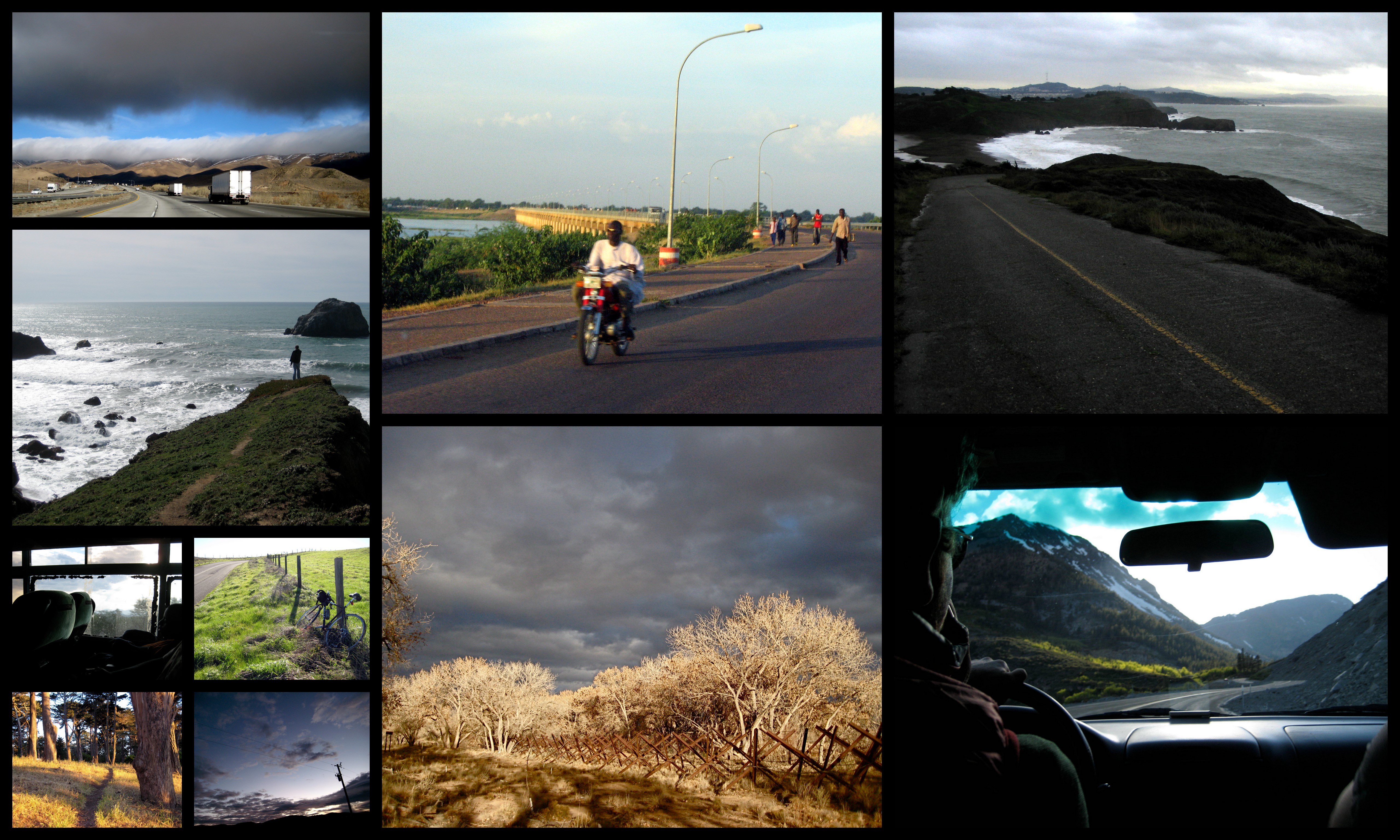
I was looking through pictures trying to find examples of what “Frisco” means to me, a question I pondered near the end of my last post. This is what I came up with. (Apparently I take a disproportionate number of pictures of graffiti murals when I go home. I’ll be sure to get more of people next time. These are just scenes that caught my eye, before I knew I was making an album.)

Is it clear what I mean when I say Frisco is beautiful, but scratchy?

Frisco

Frisco

I just came back from a 10-day visit to my hometown, San Francisco. There’s a lot I want to write about San Francisco. And by a lot, I mean a book’s worth.

Sidewalk graffiti on San Bruno Avenue, San Francisco. "SFC" stands for "Sucka Free City."

But while I struggle to form my Grand Theory of San Francisco, I’ll settle for a collection of tidbits, which sometimes are the best way to describe an unquantifiable entity. Here’s one: an enduring discussion about whether or not “Frisco” is a legit nickname.

Common knowledge says that it’s off limits. Herb Caen, San Francisco’s most famous columnist, published a book called Don’t Call it Frisco in 1953, which Wikipedia says was taken from a 1918 San Francisco Examiner article. The subject has been on steady rotation in local media for years — especially since San Francisco street culture has resurrected the term. (Read more about the whole debate in this 2003 Chronicle article, whose author seems to have read this San Francisco State publication’s article from 1997.) Continue reading

Inspiration for K’naan’s “Fire in Freetown”

Someone just passed me this YouTube clip of what, according to the video notes and the unmistakable melody, is the inspiration for K’naan’s “Fire in Freetown,” one of my favorite songs on the Troubadour album. The original is very beautiful (is that an oud, walla shu?). According to an extremely cursory Google search, Fatima Abdillahi Mandeeq (various spellings) is a Somali folk singer. I am working my Somali contacts for a translation.

Update: Hat-tip SG in Nairobi

Land and conflict in Africa

It is rare that I read an article about Africa that successfully intertwines a rich understanding of history with current events, politics and human lives. Jina Moore‘s article about African land disputes this week in the Christian Science Monitor does it. The article is especially impressive because, although scholars of Africa know that conflicts over land are a fundamental element of wars, upheaval and disagreements from Darfur to Tanzania to Nigeria, it’s not usually a subject that makes for great headlines. It’s also a difficult topic to bring to American audiences that are used to being fed the facile story of “ancient hatreds” — tribe, ethnicity and race — as explanations for African conflict (and behavior in general). Visit Moore’s story through the Scarlett Lion, where Glenna Gordon has posted more relevant links and the photography she did for the piece.

7 songs that rocked Kenya and Tanzania last year

I was sharing links to music that was popular in East Africa last year with my brother (find his alter ego here), and he asked me to put them in a list for him. That’s a good idea for my blog, I said. Only trouble is, having recently been endorsed as a blog that will make you “a better person” by the Scarlett Lion, the bar for new posts is now a bit high. A simple countdown of my faves will not suffice. Luckily, I have deep experience describing pop musical phenomena in a way that makes them seem like they have social significance (see, for example, my interview of K’naan).

So here’s a list of seven songs that I liked that got a good amount of play in East Africa in 2009, along with some context that explains why each shows something “deeper” about society. Enjoy. Continue reading

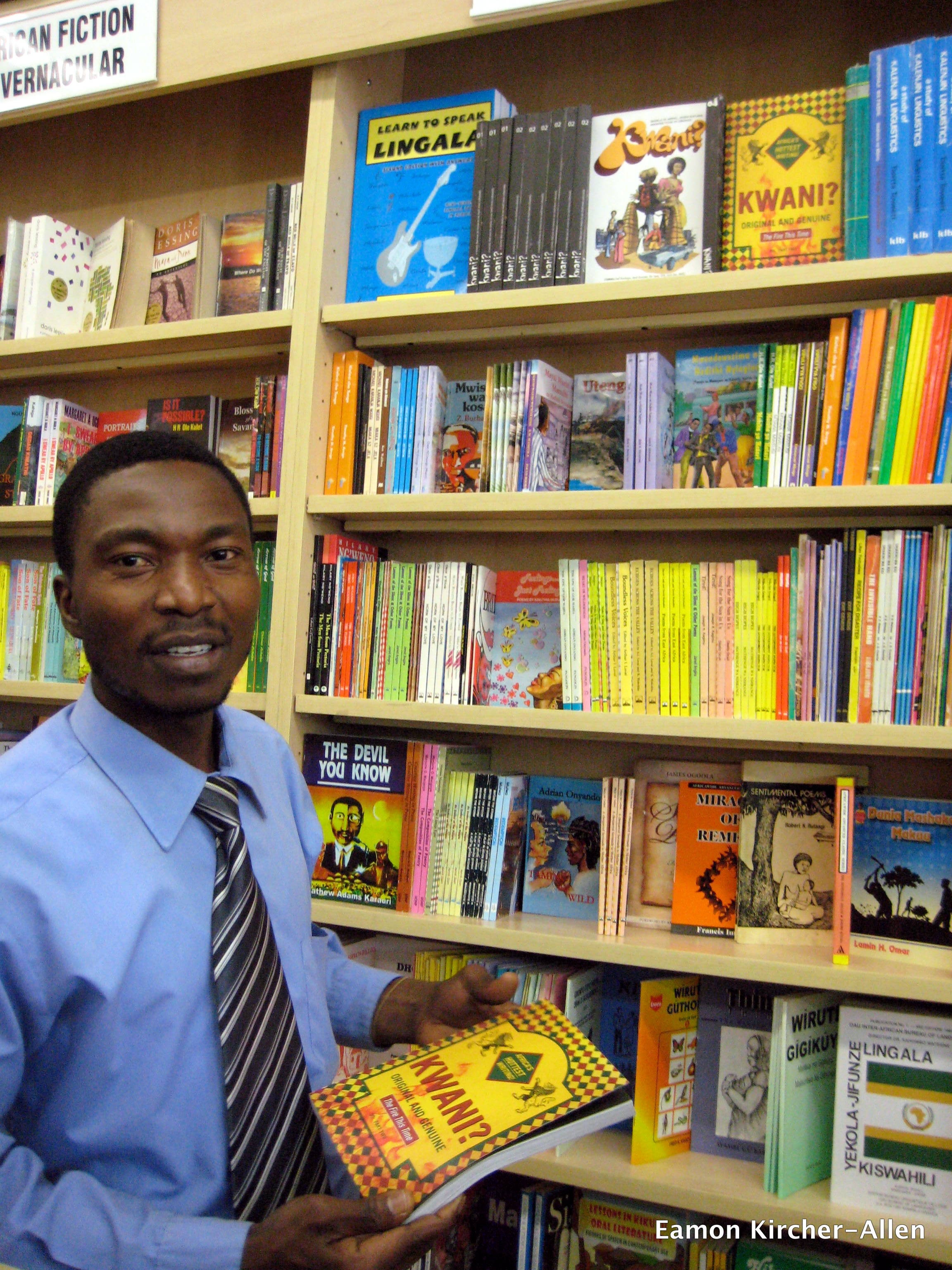
My profile of Kwani? for the Christian Science Monitor

Alas, everything’s getting published on the day I leave East Africa.

It might be just another club night in party-hearty Nairobi. In a little, second-floor downtown bar bathed in red lights and decorated with funky paintings, crunk music thumps from a high-quality sound system. Couples at tables sip drinks.

But then, after a few measures, the music stops, and a poet takes the stage. Wearing dreadlocks and an orange scarf tied around his head, Kennet B begins a spoken-word tirade against environmental degradation and corruption.

“Something revolutionary is going to happen tonight,” he announces. The crowd shouts its approval. Read more.