Darfur debate bubbles up

Let no one say that the debate around the U.S. response to Darfur is purely an academic exercise. I have no idea if Sudan Special Envoy Scott Gration has been reading Alex de Waal’s blog at the Social Science Research Council (he should be), but in the congressional hearings last week, we saw the issues haggled over and analyzed to the minutest detail on the SSRC blog start to take on the dimensions of real life consequences.

Check out the Enough blog for its painstaking chronicling of the mainstream response to Gration’s comments that Sudan’s listing as a state sponsor of terrorism is a “political decision” and that the designation of genocide may no longer be relevant. (Enough’s coverage is of course decidedly skewed against Gration. I’m pretty impressed. Until countries like Israel and Saudia Arabia — heck, even us — are listed as state sponsors of terrorism, any such designation is purely political.)

Here’s the short clip of Gration’s comments.

Dar’s Maasai

A new arrival to Dar could be forgiven for thinking that the men dressed in red checked and purple robes, white sandals and beaded anklets are wearing costumes for the benefit of tourists. (I’ve heard other people suggest this and, alas, the thought crossed my mind as well.) The Maasai are such symbols of the tourist industry here — and even have some kind of advertising cache inside the country, as the billboard below shows — that at first, it’s easy to doubt that people are going around dressed like that just because they want to.

IMG_4629-1

Continue reading

The cable to end all woes

I’ve been mulling over the news that the new fiber-optic cable has finally been laid to connect East Africa directly to the world via high-speed Internet. Tanzanians and the East African press are greeting it with a lot of excitement. That shouldn’t be surprising — Internet connectivity is a big headache here unless you’ve got good money to spend, and even then, it’s hard to do a lot of things taken for granted in the States, like watch YouTube. Still, some of the promises about the boon to the economy and dramatic reductions in Internet access cost seem a bit outlandish. (Reading that last article I can’t help but hear echoes of the monorail episode on The Simpsons.)

Then I came across this great post on Jackfruity describing the chaos that took over West Africa last week when the main cable connecting the region to Europe went down. Continue reading

South Beach weekend

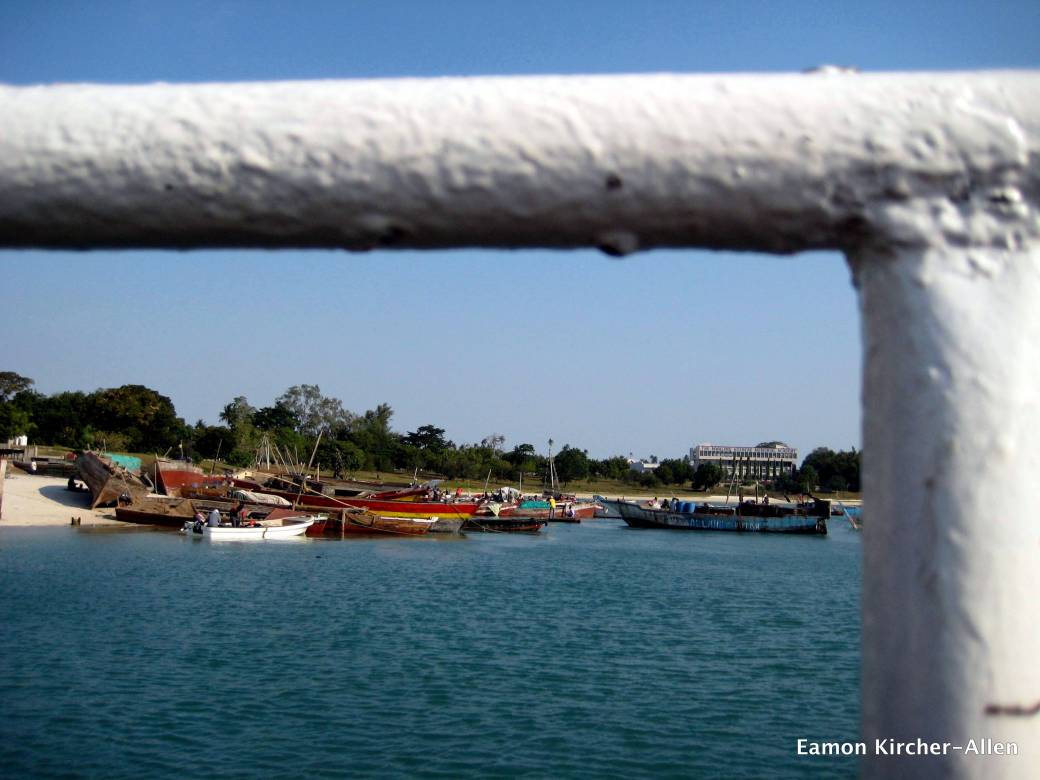
I’m not talkin’ Miami here. I spent a lovely two days on Mjimwema beach a few miles south of Dar. To get there, you ake a crowded ferry across Kurasini Creek. Everyone is in a rush to get on, before moving at about .5 knots across the 200-yard expanse of water. A ten minute taxi or daladala ride later, after passing through bucolic palm forests and coastal scrub, you arrive at a pristine beach. (To get the full effect of the ferry ride while looking at the pic below, listen to “Always On My Mind” by DaVille featuring Sean Paul, which was playing on a loop on the ferry. I’d link you, but sadly it seems to have been removed from the Internet.)

IMG_4623-1 Continue reading

Down in Festac Town

LAGOS, Nigeria — Remember that Nigerian prince who contacted you a few months back, saying he’d pay you to help transfer his inheritance to the United States? All he needed was your bank account details, and you’d be well on the way to riches — or at least on the way to seeing your riches siphoned off to an enterprising Nigerian.

Chances are that email came from an internet cafe in Festac Town, Lagos. Read my whole article here on GlobalPost.

Swahili kaleidoscope

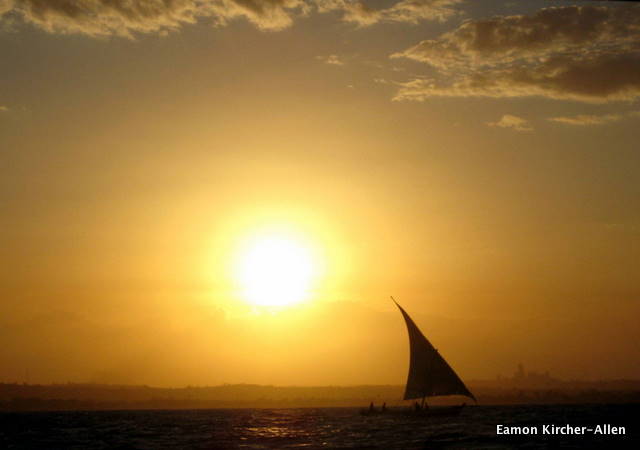
Guess what? I’m in Dar es Salaam, Tanzania. I arrived last week and I’ll be spending a few months in East Africa in a post-graduate-school, hopefully prolific daze. Here are some initial impressions.

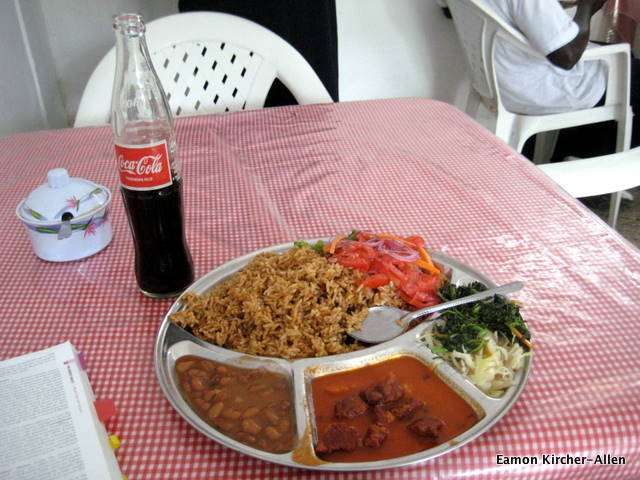
Tanzania is a hybrid place. Last week I saw hundreds of Indians leaving juma’ prayers and then ate rice pilau at a hole-in-the-wall restaurant, Asians at one elbow and people of African descent at the other. In the crowded streets there are people in every kind of dress, from the face-covering niqab – called buibui here – to both sober and colorful hijabs, wax prints and pants, stylish neckties and badly matched ones, shorts and djellabiyehs, Manchester United jerseys and Afrocentric dashikis. (There was even one guy dressed exactly like E-40, from glasses to jumbo-T-shirt-draped paunch.) Continue reading

Was Obama’s speech meddling?

Ugandan journalist Andrew Mwenda wrote an interesting response to Obama’s Ghana speech for foreignpolicy.com. In it, he claims Obama has missed the point. It’s an interesting argument, though I’m not sure it’s justified based on the speech alone. A short excerpt:

The lesson for Obama is that Africa is likely to get better with less meddling in its affairs by the West, not more — whether that meddling is through aid, peacekeeping, or well-written speeches. Africa needs space to make mistakes and learn from them. The solutions for Africa have to be shaped and articulated by Africans, not outsiders. Obama needs to listen to Africans much more, not lecture them using the same old teleprompter.

Read the whole article here.

If the ICC’s mandate were based on popularity…

In a recent post, the Enough blog discussed a poll by WorldPublicOpinion.org that showed there is much popularity for the indictment of Omar al-Bashir among the populations of some African countries — contrary to the position of the AU, which has rejected the ICC’s move.

Maybe African leaders are “out of step” with their populaces, Enough suggested. And in another post, the group questioned the judgment of those leaders for other reasons. An excerpt:

The AU includes a fair number of leaders with a lot of blood on their hands, so it’s no surprise that they would seek to shield themselves from individual prosecution.  But for the victims of war crimes and crimes against humanity, the institutionalization within the AU of impunity for the likes of Bashir, Mugabe, Deby, Meles, Issayas, Kagame, and Gaddafi is deeply troubling.

Continue reading